


How Local Businesses Can Adapt to Economic Shifts: Practical Strategies for Sustainable Growth
When the economy shifts, strong local connections matter more than ever. Learn how community engagement, smart marketing, and efficient technology can help fashion businesses not just survive but thrive.
Jan 7, 2026

In this Article
Share this Article


Thriving Through Change
Economic shifts are inevitable in the fashion business. Whether caused by inflation, supply chain disruptions, or changes in consumer behavior, these transitions test the adaptability and creativity of local businesses. But small enterprises have an advantage — agility, community connection, and authenticity. With the right mix of strategy, structure, and collaboration, they can do more than survive; they can thrive.
Key Insights for Business Resilience
⦁ Strengthen ties with your local community to build loyalty and visibility.
⦁ Diversify your revenue streams and embrace flexible pricing models.
⦁ Use affordable marketing tools and local collaborations to maintain visibility.
⦁ Focus on customer experience and feedback loops.
⦁ Invest in technology and automation to save time and increase efficiency.
Building Community as Your Economic Safety Net
When the economy tightens, communities often look inward. Local customers want to support businesses that feel personal and reliable. That means your story, your presence, and your contribution matter more than ever.
Fashion-oriented businesses can adapt by engaging with their communities through local partnerships, sponsorships, and shared events. Hosting a co-branded workshop or joining a neighborhood business alliance can help you stay visible and relevant — even when consumer spending dips.
Before long, your local community becomes your most stable market, giving you consistent engagement and authentic word-of-mouth promotion.
Affordable Marketing: Staying Visible When Budgets Shrink
One of the most effective ways to maintain awareness during economic shifts is through grassroots marketing. It’s not about spending more; it’s about being smarter.
Promoting your business through thoughtfully designed flyers can make a measurable impact. These flyers act as tangible reminders in a digital-saturated world. Using free design tools with printable flyer templates allows business owners to customize their messages easily: add your text, include photos, and even prep files for print.
This low-cost approach bridges the physical and digital worlds, keeping your brand visible in your neighborhood while reinforcing community connections.
Collaboration: The Power of Shared Audiences
Economic resilience in the fashion industry often comes from collective strength. By collaborating with nearby businesses, you can share marketing efforts, cross-promote each other’s products, and co-host events that draw larger crowds.
Consider creating bundled offers; for example, a local café partnering with a bookstore for “Coffee & Chapters” nights, or a yoga studio teaming up with a wellness store for weekend workshops. These partnerships multiply exposure and create richer experiences for customers without increasing marketing costs.
Strategic Actions for Adapting to Economic Shifts
Here’s a simple framework that local businesses can use to align their efforts.
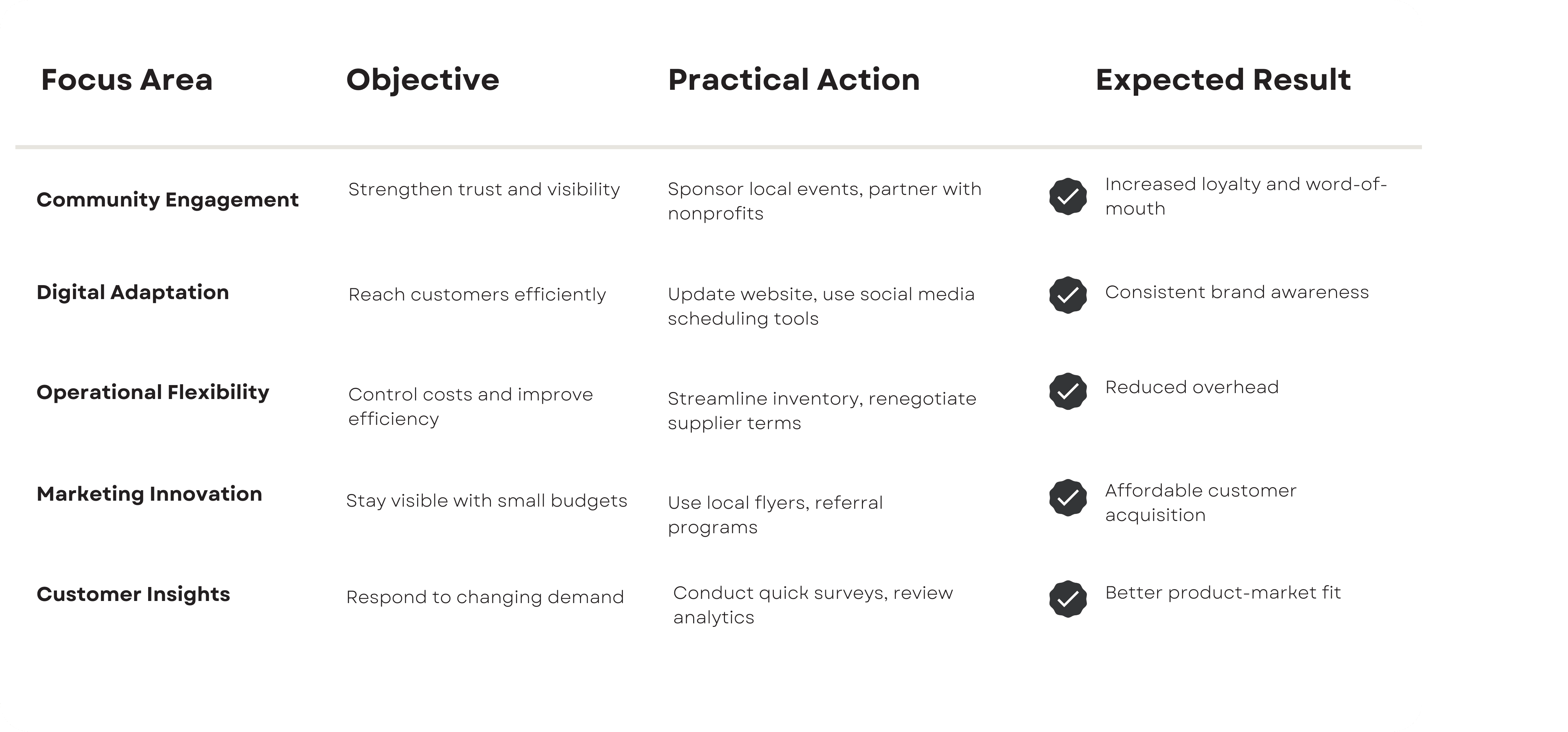
How to Build Resilience in 6 Steps
If you’re unsure where to start, use this as a quick reference for action.
- Identify your most loyal customers. Reward and retain them with personalized offers.
- Optimize for cash flow. Delay non-essential expenses and focus on essentials.
- Stay visible. Maintain your marketing presence with low-cost tools and community outreach.
- Collaborate locally. Team up with complementary businesses to share resources.
- Gather feedback. Use customer insights to adjust services or product offerings.
- Communicate openly. Keep your audience informed about changes or updates — honesty builds trust.
Smart Technology for Efficiency and Growth
Even during tough economic times, investing in the right technology can pay off. Tools that automate marketing, manage inventory, or personalize customer communication help businesses scale sustainably.
For example, Shaku Tech empowers apparel and fashion retailers to operate efficiently with AI-powered tools for body measurement, size recommendations, and visual product discovery. By reducing costly returns and improving conversion rates, these systems help businesses optimize margins while enhancing customer satisfaction — an essential combination when every sale counts.
FAQs
How can I stay visible if I cut my advertising budget?
What’s the most effective way to build long-term loyalty?
Should I invest in new technology during economic uncertainty?
How do I decide when to pivot my business model?
What if my competitors lower prices drastically?
How can I measure if my local efforts are paying off?