Weathering the Storm When Your Fashion Business Hits a Rough Patch

Fashion business owners know that downturns rarely announce themselves. One season you’re shipping steadily; the next, foot traffic dips, returns rise, and cash flow tightens. The challenge isn’t just surviving the slump, but making decisions that leave your brand leaner, clearer, and more resilient on the other side. Key Points ● Stabilize cash flow before chasing growth. ● Reconnect with your most reliable customers instead of trying to reach everyone. ● Make operational changes that reduce friction and waste. ● Invest selectively in skills and tools that compound over time.
Regrounding the Business in Financial Reality
Tough periods demand honesty. Review margins by product, not just overall revenue, and identify items that quietly drain resources through markdowns, high return rates, or complex fulfillment. Many brands discover that removing a handful of underperforming SKUs immediately eases pressure on inventory and cash.
This is also the moment to renegotiate where possible. Suppliers, landlords, and logistics partners are often more flexible than expected when conversations happen early and transparently.
Turning Data Into Daily Decisions
Once the financial picture is clear, operational discipline becomes your ally. The goal is not austerity for its own sake, but clarity about what truly moves the business forward.
Here are practical actions owners can take to regain control:
- Audit weekly expenses and flag any cost that doesn’t directly support sales or retention.
- Shorten buying cycles to avoid overcommitting to uncertain demand.
- Set tighter thresholds for promotions so discounts remain intentional.
- Build a rolling 90-day forecast and revisit it every month.
Learning to Lead With Stronger Business Judgment
Running a fashion brand blends creativity with management, and downturns expose any gaps between the two. Many owners use slower periods to sharpen their decision-making skills rather than simply waiting for conditions to improve.
Earning a business degree online can be a strategic way to do this. Online programs make it possible to study while still running day-to-day operations. Whether you focus on marketing, business, communications, or management, you gain frameworks for finance, strategy, and leadership that translate directly to real-world choices. Over time, this kind of education can strengthen how you assess risk, plan growth, and communicate direction to your team.
Using Smart Technology to Reduce Friction
Economic pressure makes inefficiency more visible, especially in ecommerce. Returns, sizing confusion, and product discovery issues quietly erode profit and customer trust.
Shaku helps fashion businesses address these problems head-on. Features such as body measurement technology, visual clothes search, and automated product tagging improve accuracy and reduce guesswork for shoppers. Better sizing recommendations lower return rates, while visual search makes browsing feel intuitive rather than overwhelming. Automated tagging also saves internal time while improving how products are presented online. Together, these capabilities can support conversion growth even when consumer confidence is fragile.
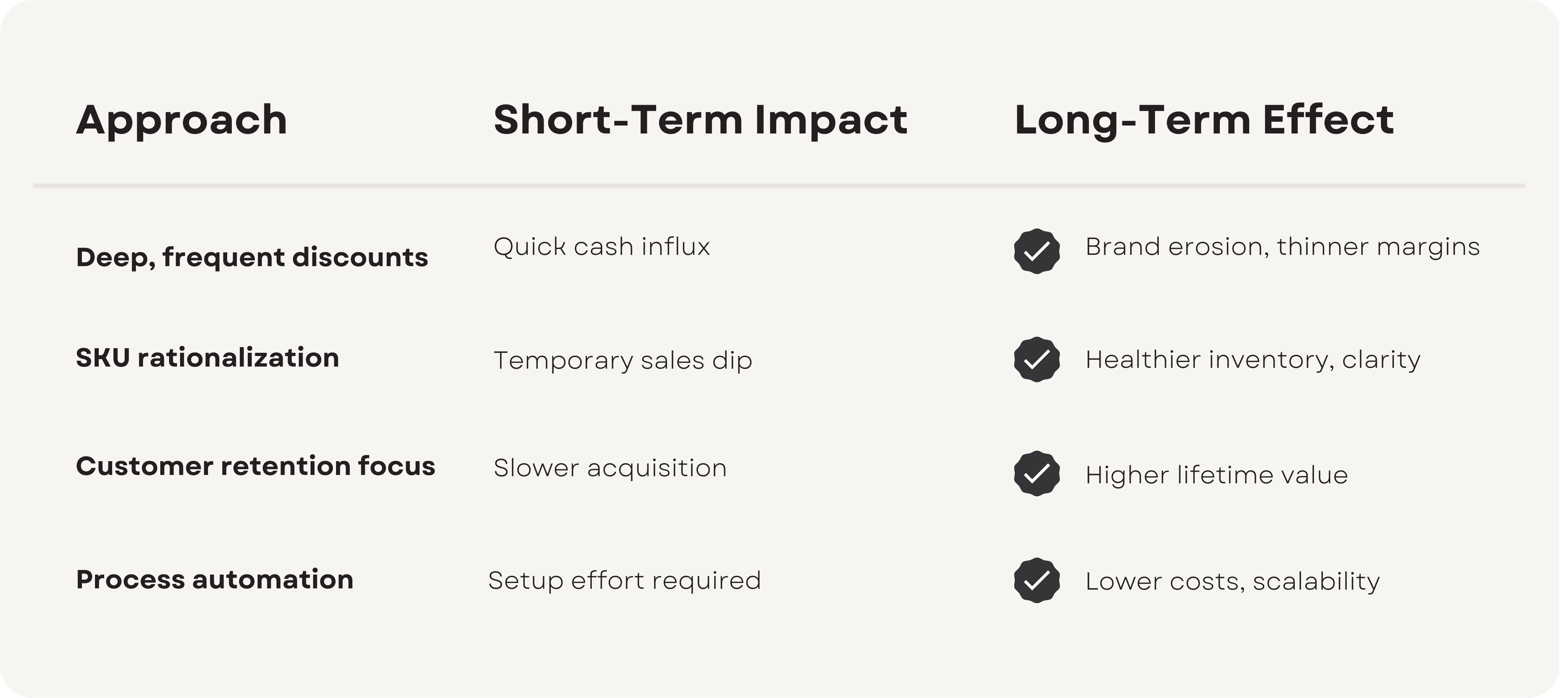
Comparing Strategic Responses During a Downturn
Different responses produce very different outcomes. Understanding trade-offs helps avoid reactive decisions.
Closing Thoughts
Every fashion business faces difficult seasons, but not every brand emerges stronger. The difference often lies in how deliberately owners respond when pressure rises. By tightening operations, investing in judgment and tools, and focusing on customers who already trust you, tough times can become a period of quiet rebuilding rather than panic. When conditions improve, those choices tend to show their value quickly.